Zum Inhalt springen Zur Seitenleiste springen Zur Fußzeile springen

Buying Property in Beautiful Puglia: Why Trust and Paperwork Matter More Than Friendship?

Puglia, with its trulli, masserie, ancient olive groves, and breathtaking coastline, has become a dream destination for many Austrians and other foreign buyers looking for a second home or an investment in Italy. The region offers authentic charm, warm hospitality, and what often appear to be excellent property prices. Yet behind the postcard scenery there can be hidden legal and technical risks that every buyer must take seriously.

Of course some houses have issues that can be fixed but for that you absolutely need professionals to assess the situation. It makes a huge difference whether the problem is a small discrepancy—such as a veranda or internal wall not correctly indicated on the cadastral plan—or whether entire rooms, extensions, or even a whole building were constructed without proper permits. A minor irregularity can often be regularized with a technical procedure, time, and money. A major abuse, however, may be impossible to legalize and could lead to demolition orders or make the property unsellable in the future.

Another crucial point is that every comune interprets and handles building permits differently. What may be accepted or sanable in one town can be rejected completely in the next. Relying on general statements like “it worked for my neighbor” is therefore dangerous; only a local professional who knows the specific municipality can give reliable advice.

Too many properties are recommended through friends of friends, casual contacts, or even some local agents who minimize potential problems. Many older houses in Salento and across Puglia have illegal extensions, unpermitted renovations, or full building abuses (abusi edilizi) that were never properly regularized. Sellers may reassure buyers with phrases like “it’s normal here,” “everyone does it,” or “we’ll fix the papers later.” Unfortunately, such promises can turn a dream purchase into a costly nightmare.

Under Italian law a property must be fully compliant with urban planning regulations (conformità urbanistica) and cadastral records (conformità catastale) in order to be legally sold and later resold. If the issue concerns only a small element—like a veranda, storage room, or internal modification—the situation is often manageable. But if entire parts of the house do not legally exist, the consequences can include the invalidity of the sale, heavy fines, demolition orders, or the inability to renovate, rent, or even connect utilities.


A Typical Real-Life Example

Consider this common situation: a charming countryside house is advertised with two bedrooms, a guest annex, and a covered veranda overlooking the olive trees. On paper, however, only the original 60 m² building exists.

  • The veranda was closed years ago without a permit—this might be a minor issue that a geometra can regularize with a fine and updated plans.
  • The guest annex, on the other hand, was built from an old agricultural shed with no authorization. That structure may be considered entirely illegal, impossible to sanare, and could legally require demolition.

Buyers who rely only on the seller’s word often discover this after signing a preliminary contract and paying a deposit. Suddenly the “great deal” requires tens of thousands of euros in legal procedures—or results in losing part of the property altogether. This is why an independent technical check before any commitment is essential.


Blind trust in personal relationships or unprofessional advice has already cost many foreign buyers tens of thousands of euros in corrective works—and in some cases the property could never be fully legalized at all.

As a real estate professional specializing in Austrian clients in Puglia, my constant advice is simple: fall in love with the house, but verify everything independently. Always hire a qualified surveyor (geometra), involve a notary at an early stage, and never skip technical due diligence. Puglia is a wonderful place to own property when the process is handled correctly—only proper checks allow you to enjoy it with peace of mind.


Essential Documents Required to Sell (or Buy) a Property in Puglia/Italy

  • Atto di provenienza – title deed
  • Visura catastale and planimetria catastale – must match the real state
  • Certificato di conformità urbanistica – confirmation of legality
  • APE – energy certificate
  • Certificato di agibilità – habitability
  • Visura ipotecaria – check for debts or liens
  • Certificazioni degli impianti – systems compliance
  • Personal documents – ID, codice fiscale, marital status

Any missing or inconsistent document can block the sale.


To-Do List for the Seller

  1. Gather all documents early.
  2. Let a geometra verify compliance.
  3. Regularize minor abuses if possible.
  4. Update APE and agibilità.
  5. Disclose issues honestly.
  6. Choose reputable agent and notary.
  7. Prepare for taxes.

To-Do List for the Buyer

  1. Obtain codice fiscale.
  2. Hire an independent geometra.
  3. Compare documents with reality.
  4. Distinguish between minor issues (e.g., veranda) and major illegal structures.
  5. Check the specific rules of the local comune.
  6. Use a bilingual notary.
  7. Sign preliminaries only after checks.
  8. Budget for taxes and fees.
  9. Never rely only on friendly advice.

Buying in Puglia can be one of the best decisions of your life. But there is a world of difference between a small correctable issue and a property that is fundamentally illegal. Only a purchase based on verified paperwork and professional assessment—not on friendship or verbal assurances—will allow you to enjoy your Puglian dream safely and without unpleasant surprises.

Hinterlassen Sie einen Kommentar

Bonus in Süd Italien !

Was sie wissen sollten,

Steuernachrichten 2024: Änderungen des IRPEF für Immobilienveräußerungsgewinne mit Superbonus

Mit dem Haushaltsgesetz 2024 wurden wichtige steuerliche Änderungen für Liegenschaften eingeführt, die vom Superbonus profitieren. 

Hier ist alles, was Sie wissen müssen:

1. Neue Besteuerung von Kapitalgewinnen:
Kapitalgewinne aus dem Verkauf von Immobilien mit Arbeiten, die im Rahmen des Superbonus durchgeführt werden (Artikel 119 des Gesetzesdekrets 34/2020), unterliegen nun dem IRPEF, wenn der Verkauf innerhalb von 10 Jahren nach Abschluss der Arbeiten erfolgt.
Dies gilt auch für alle Eingriffe, die vom Superbonus profitieren, unabhängig von der Höhe des Abzugsprozentsatzes (110 %, 90 %, 70 %, 65 %).

2. Berechnung des Kapitalgewinns:
Der Veräußerungsgewinn wird berechnet, indem die Kauf- oder Baukosten der Immobilie zuzüglich aller anderen damit verbundenen Kosten vom Verkaufspreis abgezogen werden.

3. Abschwächungen und Akzentuierungen:
Liegt der Kauf oder Bau mehr als 5 Jahre nach dem Verkauf, werden die Anschaffungs- oder Baukosten nach dem Verbraucherpreisindex neu bewertet.
Bei Superbonus-Arbeiten, die vor weniger als 5 Jahren abgeschlossen wurden, erhöhen die Kosten für solche Eingriffe die Kosten nicht, wenn der Superbonus zu 110 % mit Überweisungsoptionen oder Rabatt auf der Rechnung verwendet wurde.

4. Ausschlüsse:
Geerbte Immobilien und solche, die als Hauptwohnsitz genutzt werden, sind nach spezifischen gesetzlichen Definitionen von dieser neuen Besteuerung ausgenommen.

5. Anwendbare Tarife:
Auf Veräußerungsgewinne können die üblichen IRPEF-Sätze (von 23 % bis 43 %) oder eine Ersatzpauschale von 26 % angewandt werden.

Diese Änderungen zielen darauf ab, die mit den Vorteilen des Superbonus verbundenen Immobiliengewinne zu regulieren, die diejenigen betreffen, die Immobilien verkaufen, die mit diesem Anreiz renoviert wurden. 

Hinterlassen Sie einen Kommentar

Projekte

Kommentare anzeigen

Why 2026 Is the Perfect Year to Invest in Salento Properties

Bonus incentives, rising demand, and standout listings on ImmoApulien.com

Foreign buyers, take note: Puglia’s Salento region continues its steady rise, and 2026 still offers exceptional opportunities before any potential changes to Italy’s renovation incentives. Inland property prices remain attractively stable, while coastal locations continue to gain value. At the same time, short-term rental yields stay strong—often reaching 7–9% during peak season.

The Real Advantage: Extended National Bonuses

Italy’s generous renovation schemes remain in place through 2026, giving buyers a rare financial boost:

  • Bonus Casa – 50% tax deduction on renovation costs up to €96,000 for primary residences (36% for second homes). Ideal for kitchens, roofs, bathrooms, and general improvements.
  • Ecobonus – identical deduction rates for energy-efficient upgrades such as solar panels, insulation, heat pumps, and modern heating systems.
  • Sismabonus – up to 85% deduction when seismic safety is improved by two classes—perfect for restoring historic trulli, lamie, and masserie.

Even non-residents can benefit, provided payments are made via traceable bank transfers. And for retirees, Puglia offers an additional incentive: a 7% flat tax for those relocating to qualifying southern towns—many of them right here in Salento.


Bonus-Ready Properties Available Now

Discover these hand-picked opportunities on immoapulien.com—each with outstanding potential to maximize Italian tax incentives.

1. Country House to Renovate in Oria – €55,000

A compact structure set on more than 10,000 m² of land. With Bonus Casa and Sismabonus, this could become an affordable dream retreat surrounded by olive trees and privacy.

2. Renovation Project in Oria – €97,000

Two bedrooms, 60 m², and full renovation potential. Ideal for applying Ecobonus energy upgrades and creating a stylish modern home with significant post-deduction savings.

3. “Sleeping Beauty” near Manduria – €150,000

A charming historic property with vaulted ceilings and 22,000 m² of olive groves. Perfect for a boutique B&B project, with major upside through the 85% Sismabonus.

4. Exclusive Minoan-Style Villa – Francavilla Fontana – €299,000

Move-in ready with pool and olive grove, yet full of potential for solar installation and further enhancements under the Ecobonus.

5. Art Villa in Sava – €950,000

A contemporary architectural gem with expandable dependance—ideal for combining lifestyle luxury with energy-efficiency deductions.


Your Salento Opportunity Starts Now

Browse these and more curated properties at:
👉 immoapulien.com/en/exklusive-immobilien

Filter your favorites and contact our team at info@immoapulien.com for details, bonus guidance, or to arrange a viewing. The 2026 incentives won’t last forever—secure your slice of Salento before the summer rush begins.

Hinterlassen Sie einen Kommentar

Salento & Puglia 2026

Salento & Puglia 2026: Why the real estate market continues to boom and what is really changing now

Dear group,
2026 will be a truly exciting year for the real estate market in Puglia, and especially in the Salento. The upward trend of recent years is continuing, but with a few important new nuances.


Price development & outlook

Prices continue to rise, but more moderately than during the hype years of 2022–2024. Currently, the regional average in Puglia is around €1,450–1,500 per m² (as of the end of 2025). In the Salento, we see the following ranges depending on location:

  • Ionian coast (Gallipoli, Porto Cesareo, Ugento): €2,000–2,500 per m²
  • Adriatic coast (Otranto, Castro, Santa Maria di Leuca): €2,200–2,800 per m²
  • Inland (Lecce city & surrounding area): €1,600–2,200 per m²

For 2026, most analysts (Nomisma, Immobiliare.it, local agents) expect another +3 to +6%, especially for renovated masserie, villas with pools, and properties within 500 meters of the sea.

The reason: the supply of truly high-quality, turnkey properties remains limited, while demand continues to grow.


What is driving the market in 2026?

1. Destagionalization becomes reality
The region is investing heavily in events, food festivals, and improved connections (e.g. more train connections Bari–Lecce–Otranto, new shuttle services).
Result: More visitors are coming from October to April → higher occupancy rates and rental yields (currently 7–9% gross are possible with a good location and professional management).

2. International buyer mix
In addition to the traditional British and German buyers, we are now seeing significantly more Scandinavians, Swiss, Americans, and even Eastern Europeans. Many are buying as a second home combined with a rental investment.

3. Sustainability & energy efficiency
From 2026 onwards, properties with energy class A or B will sell much faster and at higher prices. Anyone who still owns an old masseria with energy class G and upgrades it to A/B (photovoltaics, heat pump, insulation) can achieve 20–30% higher values.

4. New incentives & tax advantages
The regional government is increasing Mini-PIA and tourism incentives, especially for conversions into boutique hotels or high-end holiday accommodations. In addition, the 7% flat tax for new residents and foreign retirees remains in place.


Hot spots for 2026

  • Southern Salento (Santa Maria di Leuca area): still a “more affordable” entry point, but demand is exploding
  • Santa Cesarea Terme – Castro – Otranto: luxury segment booming
  • Lecce city: young Italians and digital nomads are discovering the Baroque city → apartments in the historic center +15% in 2025
  • Inland areas (e.g. Castrignano, Martano, Calimera): masserie under €400,000 are becoming rare

Conclusion for buyers & investors

Anyone who entered the market in 2024/2025 did everything right. Those who are waiting now, hoping prices will fall again, will likely be disappointed. Supply is shrinking, quality is rising, and the region is becoming attractive year-round.

2026 is no longer a “bargain year,” but it is still significantly cheaper than Tuscany or the Amalfi Coast with comparable returns and quality of life.

If you have questions or are looking for current listings, feel free to reach out!
What do you think are you entering in 2026, or are you already in?

#Salento #Puglia #RealEstate #RealEstateItaly #Apulia2026

Hinterlassen Sie einen Kommentar

Real Estate Auctions!

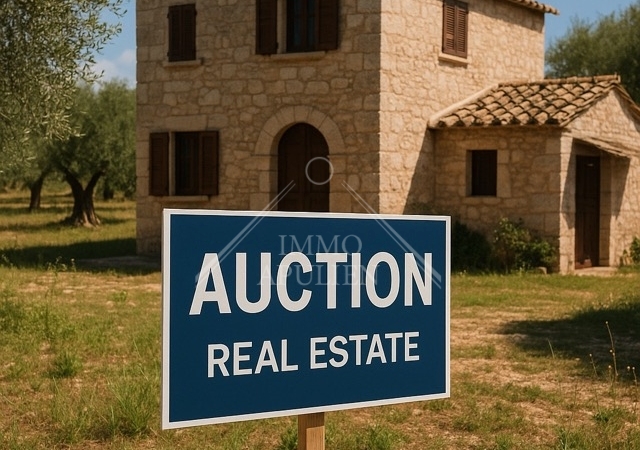
Real Estate Auctions in Apulia: Opportunities, Risks, and Valuable Tips for Interested Buyers

I decided to write about this topic now because I am currently observing two by example real estate auctions in Apulia, southern Italy. These auctions involve larger properties offered by various agencies on the market. I have noticed that prices can vary considerably between different agencies and that not all of them possess in-depth knowledge of the regional market. Make we wonder how they wish to assist as best? This can lead to uncertainties and potential risks for buyers. That’s why I want to share some important insights to help you approach real estate auctions in Apulia more confidently and make well-informed decisions.

Real estate auctions can present attractive opportunities, as many properties are sold below their usual market value. Especially in Apulia, one often finds historical farmhouses, masserie, and larger residential properties with considerable potential. With a thoughtful renovation strategy or creative investment approach, these properties can become unique personal residences or profitable investments.

However, these auctions also come with significant risks. Many properties being auctioned originate from foreclosures or insolvency proceedings. Therefore, it is essential to carry out due diligence before placing a bid. This means a thorough review of all relevant documents — including land registry excerpts, encumbrances, easements, and tenancy agreements. Without proper due diligence, unforeseen costs or legal complications can quickly arise.

One particularly important aspect is that auction properties in Italy are sold strictly “as seen” (vendita nello stato di fatto e di diritto in cui si trova). This means the buyer accepts the property in its current condition — including all structural issues, existing defects, and any legal or technical encumbrances. There is no possibility to claim hidden defects or seek compensation after the purchase. As a result, due diligence should also include a technical inspection and a legal reviewby professionals to avoid unexpected renovation costs or disputes after acquiring the property.

The physical condition of many auction properties in Apulia deserves special attention. Years of vacancy or lack of maintenance can lead to substantial renovation needs. Buyers should anticipate these costs in their financial planning to avoid unpleasant surprises later. An on-site inspection and assessment by a local technical expert are highly recommended.

Another key point is financing. Unlike traditional sales, auctions usually require proof of funds or a pre-arranged loan before bidding. Once a bid is accepted, a deposit is immediately due (usually 10% of the purchase price), and the remaining balance must be paid within a short timeframe. Failure to meet these terms can result in the loss of the deposit or even legal action. Therefore, buyers should ensure financing is fully in place before participating in the auction.

Selecting the right intermediary is also crucial. While some sellers and agents have extensive experience in Apulia and maintain reliable local networks, others may lack genuine knowledge of the regional market despite presenting themselves as specialists. Such sellers may offer only limited guidance, leaving buyers to navigate potential risks on their own. It is therefore advisable to choose partners with verifiable expertise and a solid track record in Apulia.

In addition, buyers should not rely solely on publicly available information but consult a lawyer or notary who is familiar with Italian real estate law and the auction process. Professional guidance helps clarify legal and tax-related issues and ensures a smooth transaction.

It is also essential to develop a realistic budget that accounts not only for the final auction price but also for renovation costs, taxes, and transaction fees. A well-prepared financial plan can protect buyers from unexpected financial strain.

In summary, real estate auctions in Apulia offer compelling opportunities for both investors and private buyers. They provide access to unique properties that might otherwise be difficult to find on the traditional market. However, a cautious approach, thorough due diligence, and professional guidance are essential to minimize risks and secure a successful outcome. My team and I are happy to assist you with any questions you may have. Above all, I hope this article provides a solid foundation of information so that you can navigate the Apulian real estate auction market with confidence.


Do’s and Don’ts for Real Estate Auctions

Do’s
✅ Conduct thorough due diligence: Review all official documents, including land registry excerpts, appraisals, encumbrances, easements, and tenancy agreements.
✅ Always remember that auctioned properties in Italy are sold strictly “as seen,” so inspect the property in person and consult technical experts.
✅ Consult a lawyer or notary familiar with Italian real estate law and the local market in Apulia.
✅ Arrange financing in advance and be prepared to pay the deposit and remaining balance within the required deadlines.
✅ Develop a realistic budget that includes the auction price, renovation costs, taxes, and transaction fees.
✅ Work with reliable partners who have proven experience and in-depth knowledge of the Apulian market.

Don’ts
❌ Rely solely on online listings or photos without personally inspecting the property.
❌ Underestimate the complexity of Italian auction processes or assume they function the same way as in other countries.
❌ Ignore existing encumbrances or assume they will automatically disappear after purchase.
❌ Expect every auction property to be a bargain; some may have hidden costs or legal issues that outweigh the initial price advantage.
❌ Enter an auction without securing financing; failing to meet payment deadlines can result in losing the deposit or facing legal consequences.
❌ Choose intermediaries who present themselves as experts but cannot demonstrate a reliable track record in Apulia.

Financing — Buyers must ensure they have financing arranged before bidding, as auctions typically require proof of funds or a deposit. Failure to meet the payment terms after winning the auction can lead to loss of the deposit or even legal action.

Key Considerations for Buyers

  • Legal Framework and Transparency
    Properties are sold through regulated court auctions, ensuring a structured bidding process. Each auction is accompanied by a perizia—a court-appointed appraisal report that outlines the property’s legal status, occupancy, and condition. Prospective buyers should review this document thoroughly to identify any issues that could impact the purchase.
  • Condition of Properties
    Many auctioned properties require renovation or restoration, and inspections can be limited or, in some cases, not permitted at all before the sale. Buyers should be prepared to factor in potential renovation costs and delays.
  • Occupancy and Eviction
    Some properties may still be occupied by former owners or tenants. Buyers acquire responsibility for any necessary eviction proceedings, which can be time-consuming and may involve additional legal expenses.
  • Financial Requirements and Deadlines
    Winning bidders must typically pay a deposit (around 10% of the minimum bid) at the time of the auction. The balance is usually due within a specified timeframe set by the court, often 60 to 90 days. Buyers should ensure that funds are available in advance, as financing post-auction can be challenging.
  • Potential Liabilities
    While auction sales generally cancel prior mortgages or liens, some obligations, such as unpaid condominium fees or certain local taxes, may remain. A qualified legal professional can help clarify any residual liabilities.

Recommended Practices: Do’s and Don’ts

Do:

  • Engage a local notary or lawyer with expertise in Italian property auctions to guide the process.
  • Examine the perizia carefully to understand all legal and physical aspects of the property.
  • Set a realistic budget that includes not only the purchase price but also renovation costs, taxes, legal fees, and potential eviction expenses.
  • Attend at least one auction as an observer to familiarize yourself with the process and dynamics.

Don’t:

  • Don’t place bids without fully understanding the property’s legal status or potential liabilities.
  • Don’t assume all auction prices represent bargains; some reserve prices may be close to market value.
  • Don’t overlook post-auction obligations, such as property registration and utility transfers.
  • Don’t underestimate the complexities of evicting existing occupants, if applicable.

Also, from experience, I can say it’s very important to make sure all the mortgage issues are fully resolved. Many of the auctions involve more than one bank listed in the property register, so it’s crucial to carefully review and verify all terms and conditions.

I tried to complete this information a bit further, but it’s clear that this is a very complex topic. This should serve as a helpful guideline for you.

Hinterlassen Sie einen Kommentar

What is „Rent2Buy“?

The „Rent2Buy“ model, also known as „Rent-to-Own“ or „Lease-Purchase“, is an innovative way to acquire real estate. It combines the benefits of renting with the option to purchase the property at a later date. For your clients in Apulia, this means they can initially rent a property and have a portion of the rent paid credited towards the purchase price.

How Does the Rent2Buy Model Work in Apulia?

  1. Rental Phase: Your client rents a property in Apulia for a contractually agreed period (e.g., 1 to 5 years). The monthly rent is paid like a traditional rental agreement.
  2. Rent Credit: A predefined percentage of the rent paid is credited towards the agreed purchase price of the property. This reduces the final purchase price and facilitates the acquisition.
  3. Purchase Option: At the end of the rental phase, your client has the option, but not the obligation, to purchase the property. The purchase price is fixed at the beginning of the contract, minus the credited rent.
  4. Flexibility: Should the client decide not to buy, the rental agreement ends, and there are no further obligations. The rental payments made that were not credited towards the purchase price are not refunded.

Advantages of the Rent2Buy Model for Your Clients in Apulia

For Private Purposes:

  • Risk Minimization: Clients can thoroughly test the property and its surroundings before committing to a purchase. This is particularly beneficial for a region like Apulia, which might be unfamiliar to them.
  • Gradual Acquisition: The purchase is financially eased by crediting the rent. It’s often easier to manage a monthly rent than to make a large down payment upfront.
  • Price Lock: The purchase price is fixed at the beginning of the contract. This protects your clients from potential price increases in the Italian real estate market.
  • Holiday and Residential Use: The property can be used as a holiday home or future retirement residence during the rental phase.

For Professional Purposes (e.g., Self-Employed, Digital Nomads, Freelancers):

  • Location Testing: Entrepreneurs can test Apulia as a business location without immediate long-term commitment. This is ideal for evaluating infrastructure, local markets, and business opportunities.
  • Business Expenses: Rental payments may be tax-deductible as business expenses (clients should definitely consult a tax advisor on this).
  • Flexibility for Expansion: The model allows for flexible expansion or relocation of the company’s base to Apulia.
  • Combine Life and Work: Your clients can combine work and quality of life in an attractive region like Apulia.
  • Representative Company Headquarters: The property can serve as a prestigious business address or a base for local projects.

Legal and Tax Aspects

It is essential that all „Rent2Buy“ contracts in Italy are drafted by an experienced lawyer and notary. Specifically, the following points must be clearly defined:

  • The exact amount of rent and the creditable portion towards the purchase price.
  • The fixed purchase price.
  • The duration of the rental phase.
  • The conditions for exercising the purchase option.
  • Handling of maintenance and repairs during the rental phase.
  • All tax implications for buyers and sellers (Italian VAT, transfer tax, etc.). Your clients should definitely seek tax advice in Italy for this.

Your Offer to Clients

With the „Rent2Buy“ model in Apulia, you offer your clients a unique opportunity to realize the dream of owning a property in Southern Italy, whether for private use or as a strategic base for their professional activities. It is a flexible and secure model that offers planning certainty while allowing room for individual decisions.

Part 2: Article for Sellers (can be a separate blog post or a section on your homepage)

Selling Your Home in Apulia? Discover the Innovative Solution: Rent2Buy!

Are you dreaming of selling your property in Apulia, but the right buyer is elusive? Or are you looking for an intelligent alternative to traditional sales? We have the solution that offers you more flexibility and security: The Rent2Buy Model.

Apulia, with its breathtaking coastline, charming Trulli, and warm hospitality, attracts people from all over the world. However, not every potential buyer can or wants to pay the full purchase price immediately. This is where Rent2Buy comes in – a model that opens up entirely new possibilities for you as a seller.

What is Rent2Buy, and Why is it Attractive for You as a Seller in Apulia?

In Rent2Buy, also known as Lease-Purchase, an interested party rents your property for a pre-agreed period. A portion of the rent paid is credited towards the final purchase price, which you and the buyer determine at the outset. At the end of the rental phase, the tenant has the option to buy the property.

This may sound unusual, but it offers crucial advantages for you as an owner:

  • Expand Your Buyer Pool: You reach individuals who cannot or do not want to commit to an immediate purchase. This includes clients who might first want to test Apulia as a permanent residence or business location.
  • Regular Income Instead of Vacancy: During the rental phase, you receive fixed monthly rental income. This means your property isn’t sitting idle; it’s already generating revenue while you work towards completing the sale.
  • Price Security with a Fixed Price: The sale price is contractually set from the beginning. This protects you from unexpected value depreciation and gives you financial planning security.
  • Bridge Long Sales Periods: In a sometimes slow-moving real estate market, Rent2Buy can be an ideal bridge. You generate income and keep your property active on the market until the purchase is finalized.
  • Increase Purchase Motivation: Crediting the rent motivates the tenant to exercise the purchase option later, as they have already „invested“ in the property.

Your Security is Our Priority

We understand that selling a property is a major decision. That’s why we place the highest value on transparency and legal certainty.

We work closely with experienced Italian lawyers and notaries. Every Rent2Buy contract is meticulously drafted to cover all eventualities and optimally protect the interests of both parties. From defining the rent and the creditable portion to the conditions of the purchase option – everything is clearly and legally binding.

Are You a Property Owner in Apulia? We’re Looking for You!

If you own a property in Apulia and are intrigued by the innovative Rent2Buy model as a selling strategy, we want to hear from you. We are actively seeking suitable properties to feature within our Rent2Buy portfolio, connecting them with a growing pool of potential buyers. Let’s explore how this model can work for your specific property and sales goals.

We Are Your Partner for the Future of Real Estate Sales in Apulia

If you are considering selling your property in Apulia, and the Rent2Buy model could be an interesting option for you, then contact us!

We are your competent partner when it comes to exploring innovative avenues in real estate sales. We are happy to provide you with personal and non-binding advice on the possibilities that Rent2Buy offers for your specific situation.

Let’s find the right buyer for your Apulian home together!

Hinterlassen Sie einen Kommentar

ZES Unica 2025: Strategic Opportunities for Investors

Why Investors Should Take a Closer Look

Recently, several clients have asked me about investment opportunities in Southern Italy. After personally attending a seminar on the ZES Unica (Unified Special Economic Zone), I’d like to share some key insights that could be highly relevant for your real estate or business investment strategy.

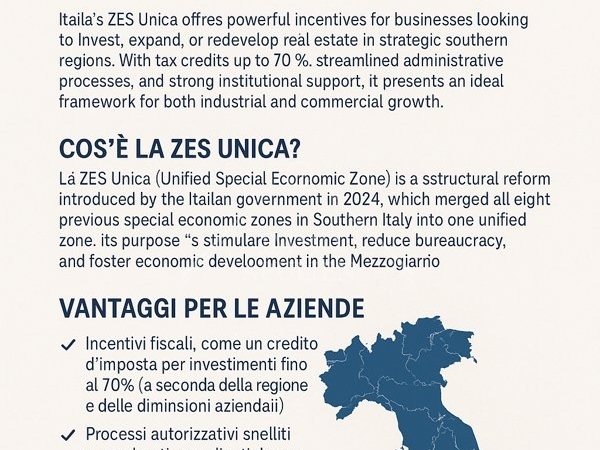
Italy’s ZES Unica offers a powerful set of incentives for companies and property owners looking to invest, expand, or redevelop assets in the strategic regions of Southern Italy. With tax credits of up to 70%, streamlined administrative processes, and strong institutional support, the ZES Unica is an ideal framework for driving industrial, commercial, or innovation-driven growth.

Whether you’re exploring a new business setup or planning to enhance the value of existing properties, ZES Unica helps you reduce costs, speed up permits, and access public funding tied to innovation and sustainability.

We work directly with experienced professionals to build customized investment plans and support you in realizing the full potential of your project. If you have any questions or want to explore specific options, I’m available and happy to assist you personally.


Seminar Highlights – ZES Unica 2025

  1. Investment Tax Credit: Up to 70% for qualifying areas in Apulia, based on investments in machinery, equipment, land, or business-use real estate (per Art. 16, Legislative Decree 124/2023).
  2. Administrative Simplification: Faster and easier permitting processes, supported by a centralized Digital One-Stop Desk under the Prime Minister’s Office (Art. 15, D.L. 124/2023).
  3. Role of the Innovation Manager: Critical in supporting companies with qualifying investments in digital transformation and green energy transition.
  4. Support from Local Banks: Institutions like BCC play a strategic role in financing and advising businesses on how to leverage the ZES framework.

What is the ZES Unica?

The ZES Unica (Unified Special Economic Zone) is a landmark reform introduced by the Italian government in 2024, which merged all eight previous special economic zones in Southern Italy into one unified zone. Its goal is to attract investmentsimplify bureaucracy, and boost economic growth in the Mezzogiorno (Southern Italy).

Benefits of the ZES Unica:

  • ✅ Tax credits up to 70% on eligible investments (equipment, real estate, infrastructure)
  • ✅ Accelerated administrative procedures via a centralized digital portal
  • ✅ Priority access to public grants and incentives
  • ✅ Support for innovation, energy efficiency, and digitalization

Covered Regions:

The ZES Unica includes all of:
Apulia, Calabria, Campania, Sicily, Basilicata, Molise, Sardinia, and parts of Abruzzo.

It is open to small and medium enterprises (SMEs) as well as large corporations interested in setting up or expanding operations in these regions.

TYPE OF ENTERPRISEPRODUCTIVE INVESTMENTS (max 95%)TRAININGENVIRONMENTAL SUSTAINABILITYINNOVATIONCONSULTINGTRADE FAIRS
Small Enterprises50% grant + 10% advance70% grant65% grant50% grant50% grant50% grant
Medium Enterprises40% grant + 10% advance or 60% for disadvantaged workers60% grant55% grant50% grant50% grant50% grant
Large Enterprises30% grant + 10% advance or 50% for disadvantaged workers50% grant45% grant50% grant50% grant50% grant

📩 Let’s talk about your project.
If you have a property or business idea you’d like to develop under the ZES Unica program, I’m happy to support you with our expert partners. Together, we can explore tailored solutions and strategic funding opportunities.


Hinterlassen Sie einen Kommentar

Friendly Deal or Costly Lesson? Buying Property Without an Agent

I’m increasingly noticing that private individuals are offering their properties for sale in Apulia, particularly in the Salento region. At first glance, this may seem appealing – no agent fees and a deal made „among friends.“ However, such situations often lack a sober perspective, especially when one assumes that nothing bad can happen when dealing with friendly faces.

But caution is advised: not everything is as sunny as the weather itself. Many of these so-called private sellers have themselves made poor purchases – properties with structural defects or unregistered modifications that were never approved by local building authorities. Some overpaid at the time and now want to avoid the embarrassment or the admission of this by bypassing professional agents. Instead, they hope to find someone who, like they once were, is less critical or questioning. Important flaws are often not disclosed, and the typical newcomer, who trusts too quickly, may learn some hard lessons down the road.

Of course, this isn’t the only issue. Some real estate agents also fail to take their responsibilities seriously and try to avoid accountability – something that casts a poor light on the profession. Then there are the often adventurous brokerage fees of 5 to 6%, which can be difficult to justify.

Another challenge: some agencies do not speak English, which puts them at a disadvantage when working with international buyers. But even well-known names or large real estate franchises are no guarantee of good service – ultimately, everything depends on the individual person, not the brand name. Meeting certain professional requirements is important, of course, but that alone doesn’t make someone a good agent.

Buyers should also be aware that, especially when they are foreigners, they may naturally feel more connected to native speakers or assume they’ll receive more understanding. While speaking the same language can certainly help, it is not decisive. Private sellers, too, have their own interests. Just because someone speaks your language doesn’t automatically mean they are acting in your best interest. Everyone must weigh this carefully for themselves.

There are a handful of trustworthy real estate agencies that are truly capable of handling international clients and their specific needs. So be careful – what seems like a bargain at first may end up being very costly.

Even though I myself work in real estate, I want to make it absolutely clear that this text is not self-promotion. I’m not trying to acquire clients or advertise my services. This is simply a personal reflection on current trends and experiences, particularly in the Salento region. I believe it’s important to highlight certain developments and encourage critical thinking – regardless of my professional role. Anyone reading this should see it as a thought piece, not as an advertisement.

Best regards, Elisabeth

#realestateinvesting#expats#property#peopel#situations#puglia#apulien#how#to#purchase#home

Hinterlassen Sie einen Kommentar

Ostern in Apulien

Ostern in Apulien – Zwischen stiller Andacht und kulinarischem Zauber

Wenn sich der Frühling über Apulien legt, erwacht nicht nur die Landschaft – auch die Seele dieser einzigartigen Region im Süden Italiens beginnt zu leuchten. Ostern hier, im „Absatz des italienischen Stiefels“, ist ein Fest der Kontraste: tief verwurzelte Spiritualität trifft auf gelebte Tradition und köstliche Genüsse, die jedes Jahr aufs Neue verzaubern.

Stille, die unter die Haut geht

Am Karfreitag kehrt in vielen apulischen Dörfern eine feierliche Stille ein. In Orten wie Noicattaro oder Francavilla Fontana ziehen Gläubige barfuß durch die Straßen – schwere Holzkreuze auf den Schultern, begleitet vom dumpfen Rhythmus der Trommeln, die an die Nägel Christi erinnern. Es ist eine ergreifende Szene, die unter die Haut geht – archaisch, echt, bewegend.

Ein ganz besonderer Moment spielt sich in Ruvo di Puglia ab. Während der berühmten Processione dei Misteri werden überlebensgroße, antike Statuen – in weiße Tücher gehüllt – durch dunkle Gassen getragen. Die Straßenbeleuchtung wird ausgeschaltet, Fenster leuchten im Kerzenschein. Die Stille ist fast greifbar, nur durchbrochen vom leisen Murmeln der Prozession. Es ist, als ob die Zeit stillsteht – ein Gänsehaut-Moment für alle, die ihn erleben dürfen.

Süße Traditionen und festliche Genüsse

Doch Ostern in Apulien ist nicht nur andächtig – es ist auch ein kulinarisches Fest. In Lecce, der barocken Perle des Südens, beginnt oft schon am Gründonnerstag ein Ostermarkt, der Genießer-Herzen höherschlagen lässt. Hier gibt es Scarcelle – liebevoll von Hand gebackenes Ostergebäck in Form von Kreuzen oder Tauben, bunt verziert mit Zuckerguss und Perlen. In der Mitte: ein hartgekochtes Ei – das Symbol für neues Leben. Ein süßer Gruß aus der Vergangenheit, der heute noch genauso schmeckt wie damals bei „Nonna“.

Picknick mit Meerblick

Am Ostermontag, dem Lunedì dell’Angelo, zieht es die Apulier an die Küste. Und ehrlich – wo ließe sich das Leben besser feiern als auf den weißen Felsen von Polignano a Mare, mit Blick auf das glitzernde, türkisfarbene Meer? Zwischen alten Steintreppen und wilden Blumen breiten Familien ihre Decken aus, holen Frittata di maccheroni (ein deftiges Nudelomelett), knusprige Taralli und hausgemachten Wein aus dem Picknickkorb. Vielleicht ertönt plötzlich Musik – ein Akkordeon, ein paar Stimmen, ein Lied. Und wenn du Glück hast, zieht sogar eine kleine Prozession hinunter zum Meer. Einfach so, ohne Programm – ganz aus dem Moment heraus.


Ostern in Apulien ist kein Spektakel – es ist ein stilles Wunder, das mit jedem Schritt, jedem Duft, jedem Bissen spürbar wird. Wer es einmal erlebt hat, wird es nie wieder vergessen.

OsternInApulien #ItalienReise #ApulienErleben #Süditalien #TraditionErleben #RuheUndGenuss #CucinaItaliana #ApuliaVibes #SlowTravelItaly #Osterreise #ItalianEaster #EasterInItaly #Scarcella #RuvoDiPuglia #LecceLove #PolignanoAMare

Hinterlassen Sie einen Kommentar

Kaufpozess in Italien

Kaufprozess einer Immobilie in Italien: Wichtige Schritte

1. Kaufangebot („Offerta“)

  • Ein formelles, schriftliches Angebot (auf Italienisch & Englisch) wird über den Makler eingereicht.
  • Eine Anzahlung von 10.000–20.000 € („Caparra Confirmatoria“) wird bei Annahme fällig.
  • Diese Anzahlung ist rechtlich bindend:
    • Falls der Käufer zurücktritt, verfällt sie.
    • Falls der Verkäufer zurücktritt, kann der Käufer das Doppelte zurückfordern.

2. Vorvertrag („Compromesso“ oder „Contratto Preliminare“)

  • Wird nach Angebotsannahme unterzeichnet und ist für beide Parteien verbindlich.
  • Enthält Kaufpreis, Abschlussdatum und alle Vertragsdetails.
  • Käufer leistet eine Anzahlung von 10–20 % des Kaufpreises.
  • Maklergebühr („Provvigione“) wird zu diesem Zeitpunkt fällig.

3. Notarieller Kaufvertrag („Rogito“ oder „Atto Notarile“)

  • Der Notar („Notaio“) führt die rechtliche Eigentumsübertragung durch.
  • Der Käufer wählt und bezahlt den Notar, der die Rechtmäßigkeit des Kaufs sicherstellt.
  • Ein offizieller Übersetzer ist für Nicht-Italienischsprachige Pflicht.
  • Ein italienisches Bankkonto ist empfohlen, aber nicht erforderlich – der Notar kann Zahlungen über ein Treuhandkonto abwickeln.

Steuern beim Immobilienkauf & Eigentum in Italien

Steuern beim Kauf

  • Grunderwerbsteuer („Imposta di Registro“)
    • 9 % des Katasterwerts für Ferienhäuser.
    • 2 %, wenn der Käufer innerhalb von 18 Monaten nach Kauf Residenzstatus („Prima Casa“) beantragt.
    • Zahlung erfolgt beim Notar.
  • Mehrwertsteuer (MwSt.)10 % (oder 4 %), nur bei Neubauten oder Off-Plan-Käufen vom Bauträger.
  • Weitere Gebühren: Einmalige Gebühren (~50 € je) für Grundbuch, Kataster & Hypothekeneintrag.

Jährliche Steuern

  • IMU/TASI (Grundsteuer)0,7–1 % des Katasterwerts, zahlbar im Juni & Dezember. Prima Casa ist befreit.
  • TARI (Müllgebühr)2–4 € pro m², je nach Gemeinde unterschiedlich.

Weitere Aspekte

  • Nicht-Residenten müssen Mieteinnahmen in Italien und ihrem Heimatland versteuern (Doppelbesteuerungsabkommen greift).
  • Kapitalertragssteuer (26 %) fällt an, wenn ein Ferienhaus innerhalb von 5 Jahren verkauft wird.

Hinterlassen Sie einen Kommentar

de_DE_formalGerman
Überblick über den Datenschutz

Diese Website verwendet Cookies, damit wir Ihnen die bestmögliche Benutzererfahrung bieten können. Cookie-Informationen werden in Ihrem Browser gespeichert und dienen dazu, Sie wiederzuerkennen, wenn Sie auf unsere Website zurückkehren, und unserem Team zu helfen, zu verstehen, welche Bereiche der Website Sie am interessantesten und nützlichsten finden.